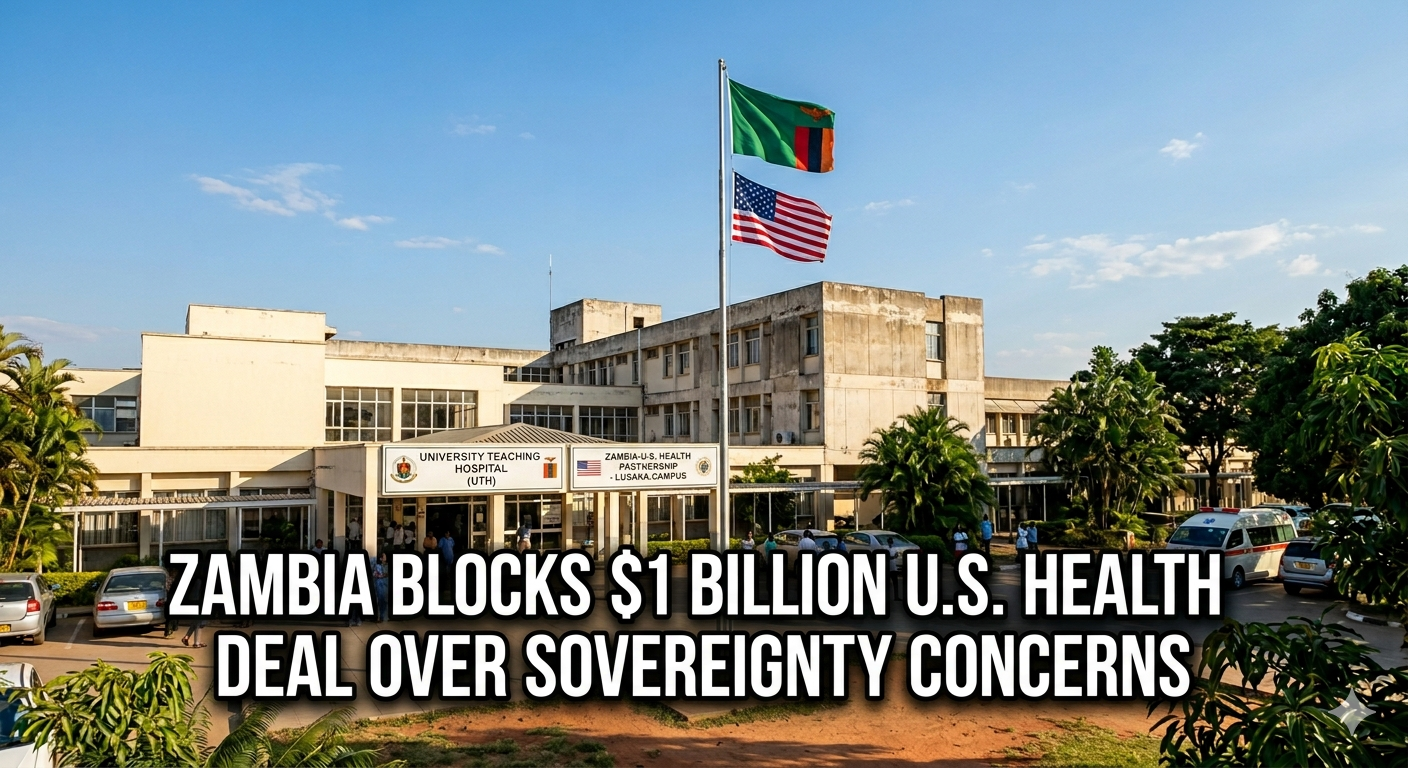
Negotiations between Zambia and the United States over a proposed $1 billion, five-year health funding deal have come to a halt, sparking worries about the continuity of critical public health initiatives such as HIV treatment, malaria prevention, maternal care, and outbreak preparedness.The agreement was meant to secure long-term support for Zambia’s health system, but discussions have stalled after Zambian officials raised objections to certain provisions in the draft. Lusaka has expressed concern that some clauses could extend beyond health cooperation and encroach on other national policy areas.
Concerns Over Sovereignty and Conditions
Zambian authorities have pointed to specific language around data sharing and potential indirect links to the mining sector as problematic. Senior officials emphasize that health partnerships with the U.S. should remain focused solely on health outcomes, without what they see as unwarranted influence on unrelated economic matters.A senior Zambian official involved in the talks stated the government “will not accept an agreement that undermines national sovereignty or introduces conditions outside the scope of health.” The official also stressed the need for clear assurances that the deal would not affect decisions related to the management of natural resources—an issue of high sensitivity in a country where copper and cobalt are vital to the economy.
U.S. Expresses Concern Over Delays
U.S. officials, for their part, have grown increasingly frustrated, noting that Zambia has not advanced negotiations despite extensive technical discussions. According to sources familiar with the process, Washington believes many of Lusaka’s concerns stem from misunderstandings of the agreement’s wording.American representatives have warned that without a formal agreement, it will be harder to sustain and plan large-scale health programs over the long term. While current funding is expected to continue for now, the absence of a signed framework creates uncertainty for future support.Current Health Programs Remain OperationalFor the time being, key health services are continuing without disruption. These include:
– Antiretroviral therapy for over one million Zambians with HIV- Programs to prevent mother-to-child transmission of HIV
– Malaria control, including distribution of treated bed nets
– Disease surveillance systems for cholera and emerging threats.
Still, the lack of a finalized deal casts doubt on future investments in health infrastructure, laboratory capacity, and workforce training—areas crucial for long-term system resilience. Experts caution that even the perception of instability in donor relations can disrupt supply chains, delay procurement, and hinder service expansion at clinics across the country.
Political and Public Debate in Zambia
The impasse has sparked discussion among civil society groups, opposition leaders, and public health advocates within Zambia. Some welcome the government’s cautious approach, citing past concerns about unclear or overly restrictive aid terms. Others worry that political considerations could put essential health services at risk for millions who depend on them.Several health advocacy organizations have called on both sides to resume negotiations, warning that prolonged delays could “undermine two decades of progress” in U.S.-Zambia health collaboration.
A Regional Shift in Aid Dynamics
The situation mirrors a wider trend across parts of Africa, where governments are reevaluating foreign aid agreements perceived as imposing excessive conditions. Countries are increasingly demanding greater transparency, local control, and alignment with national development goals.In Zambia, a discussion initially framed as a technical funding matter has broadened into a national conversation about sovereignty, accountability, and the nature of international partnerships. The outcome could influence how Zambia—and possibly other nations—engages with major donors in the future.
Path Forward Uncertain
Both governments say they are still committed to reaching a deal, but there is no indication when formal talks might restart. In the meantime, uncertainty looms over a health system that continues to rely significantly on external funding, even as efforts grow to expand domestic financial support.The ability of both sides to resolve their differences will shape not only the future of the $1 billion health package but also the trajectory of one of southern Africa’s most important health collaborations.