A Reform That Isn’t Really a Reform.
Citizens, analysts, and democracy advocates are watching closely — and most don’t like what they see. The concern isn’t the idea of a Vice President itself. The concern is why it’s happening, how it’s happening, and who it truly serves.
President Paul Biya is one of the world’s oldest and longest-serving heads of state. Questions about succession have grown louder with each passing year. Yet rather than opening the door to genuine renewal, this bill appears designed to keep power exactly where it has always been — inside a tight circle around the president and the CPDM ruling party.
A Parliament That Approves, Not Debates
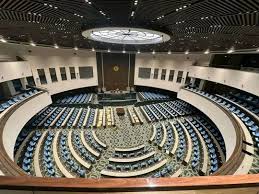
The National Assembly consists overwhelmingly of ruling party members. Historically, it has never rejected a presidential proposal, nor has it exercised meaningful oversight over those in power. This bill followed the same pattern — arriving directly from the presidency, bypassing civic debate and grassroots consultation entirely.
Constitutions exist to protect citizens from arbitrary power. Critics argue that in Cameroon, the constitution has become something else: a document that one office can rewrite at will, without the people’s voice in the room.
What a Vice President Actually Means Here.
On paper, creating a Vice President sounds like modernization. In practice, analysts see it as an insurance policy for continuity — not change. Here’s why:
- Succession stays controlled. The VP takes over if the president dies or becomes incapacitated, but that determination rests with the Constitutional Council — an institution many view as politically dependent. Real succession power stays with the ruling elite.
- The inner circle holds firm. A new VP cannot appoint their own deputy until after formally assuming the presidency. The same networks that hold power today stay intact tomorrow.
- The VP acts only when permitted. The Vice President can exercise authority only when the president grants it. In a system built on centralized control, that permission is unlikely to come often.
A Constitution Without Its People
A constitution is supposed to carry the voice of an entire nation. In this case, however, the process shut that voice out. There was no public consultation, no open debate in Parliament, and no clear explanation of how key decisions were reached.
Because of all this, the Vice Presidency — as currently written — does not spread power more widely. Instead, it simply manages who holds it next, while keeping the same hands on the wheel that have steered this country for nearly five decades.
Cameroon may soon have a Vice President. Nevertheless, it still does not have a real balance of power. For many citizens, this moment feels less like democratic reform and more like the walls closing in on an already narrow space for open, honest governance.