
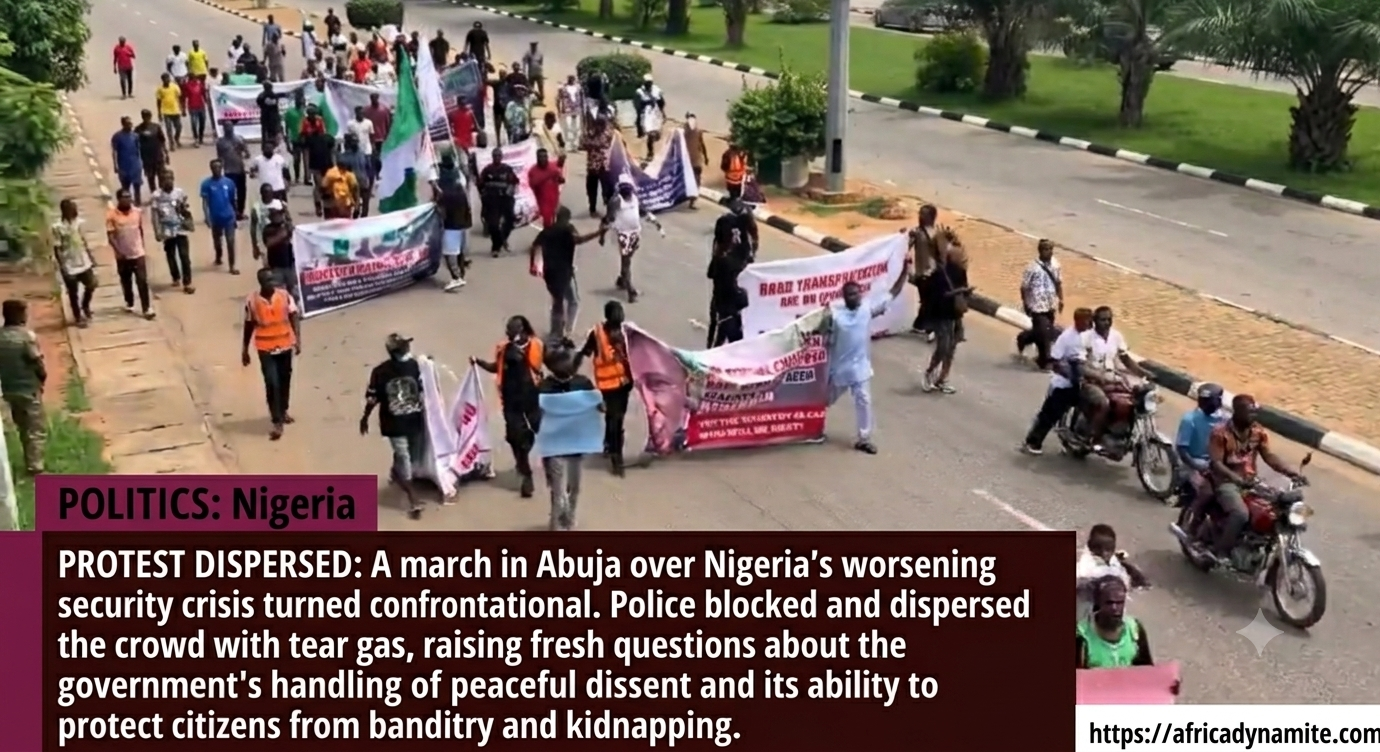
In Abuja, a protest over Nigeria’s worsening insecurity crisis turned confrontational when police dispersed a march, leaving activists and ordinary citizens frustrated over both the violence on the streets and the violence that first brought them together. The demonstration was meant to highlight complaints about kidnappings, banditry, and a growing sense that communities are not being protected, but it ended in clashes and tension.
Police Crackdown Raises Questions on Peaceful Dissent
The protest captured a growing mood across Nigeria: people are tired of hearing about insecurity without seeing real progress, and they are willing to put themselves on the line to demand change. Many marchers said they were not just protesting for political reasons; they were protesting because families in their communities have been displaced, kidnapped, or killed, and they feel the government has not responded fast enough.
Growing Frustration Over Kidnappings and Banditry
In recent years, Nigeria has faced repeated security challenges, from insurgent attacks in the north to kidnapping and banditry in several regions. These problems have strained the public’s trust and fuelled a sense that ordinary people are left to protect themselves while the state struggles to keep up. The Abuja march was one of the latest expressions of that frustration.
The police response, which involved blocking streets and breaking up the crowd, raised fresh questions about how the government handles peaceful protests. Some observers argue that the focus should be on addressing the root causes of insecurity, not just on controlling demonstrations. For many citizens, the priority is safety at home, not the order of the streets.

The incident in Abuja is unlikely to be the last protest over insecurity. As long as violence continues and communities feel unprotected, demonstrations will keep appearing in different parts of the country. What matters now is whether the government will treat these protests as warnings rather than mere disruptions, and whether it will move beyond security statements to real action.
For ordinary Nigerians, the message is clear: people want to feel safe in their homes, on their roads, and in their schools. They want to be able to live without fear of attacks, kidnappings, or raids. That is the core demand behind the Abuja march, and it is the issue that will keep shaping public anger and protest in the future.