
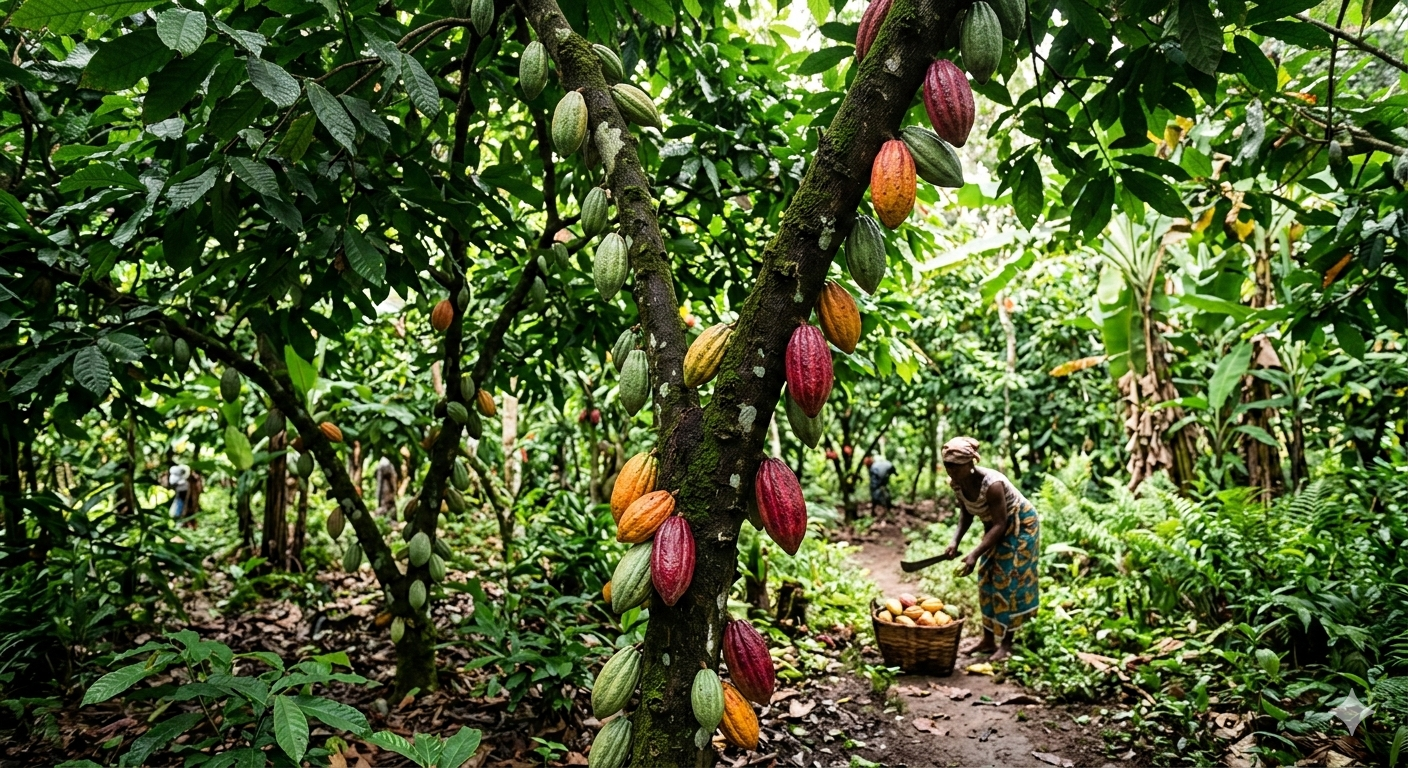
YAOUNDÉ/ABIDJAN — Despite robust global demand for chocolate, a devastating crash in cocoa prices is plunging West African farmers into a poverty crisis, with reports of thousands of tons of beans rotting in warehouses while producers in Cameroon and Ivory Coast abandon their plantations.
Following a period of historic highs in 2024–2025, cocoa futures have plummeted by more than 50% in early 2026, dropping from over $12,000 per metric ton to around $4,000–$5,000, forcing government-led price cuts that have left farmers unable to cover their production costs.
Rotting in the Fields
In Ivory Coast, which produces over 45% of the world’s cocoa, the crisis has become severe. With international buyers ghosting the market, cocoa beans are piling up in warehouses, and in some cases, rotting in storage because farmers cannot find buyers for their harvest.
“We were told on television that the government had sent billions to buy cocoa. But so far, frankly, we haven’t seen anything,” a local union representative told reports, describing a scene where a “record harvest” has brought farmers closer to poverty than ever before.
The situation is equally dire in Cameroon, particularly in the Southwest region, where cocoa farmers are facing a rapid collapse in income. Farmgate prices have fallen by over 30% in just weeks, with reports that some producers are beginning to chop down their cocoa trees to make way for alternative crops.
“Die a Poor Man”
For many, the promise of the cocoa industry has evaporated.
“If I keep this cocoa farm for the next 10 years, I would die a poor man,” said a farmer quoted in a report on the industry crisis.
The price crash follows a boom fueled by climate-related shortages in 2024. However, better weather conditions and increased supply from other regions, coupled with reduced demand from consumers facing higher chocolate prices, have led to a massive market surplus.
Ivory Coast has slashed the price paid to farmers by more than half to 1,200 CFA francs ($2.13) per kg for the 2026 season to align with the plummeting global rate. This has sparked fears of widespread child labor as families can no longer afford school fees, with some farmers protesting the severe pay cuts.
Structural Failures and Shifting Crops
The crisis has exposed the deep vulnerabilities of West African cocoa farmers, who are often at the mercy of volatile, unregulated, or poorly managed government purchasing systems. While governments in Ivory Coast and Ghana have attempted to launch buyback programs to handle excess stock, experts say these are too slow.
In the Southwest region of Cameroon, the desperation has led to a major shift in land use. Farmers are abandoning the crop that was once their “source of pride,” switching to food crops as they struggle to survive the market downturn.
While the world continues to demand high-quality chocolate, the farmers in the heart of the “Cocoa Belt” are paying the highest price for the market’s volatility.